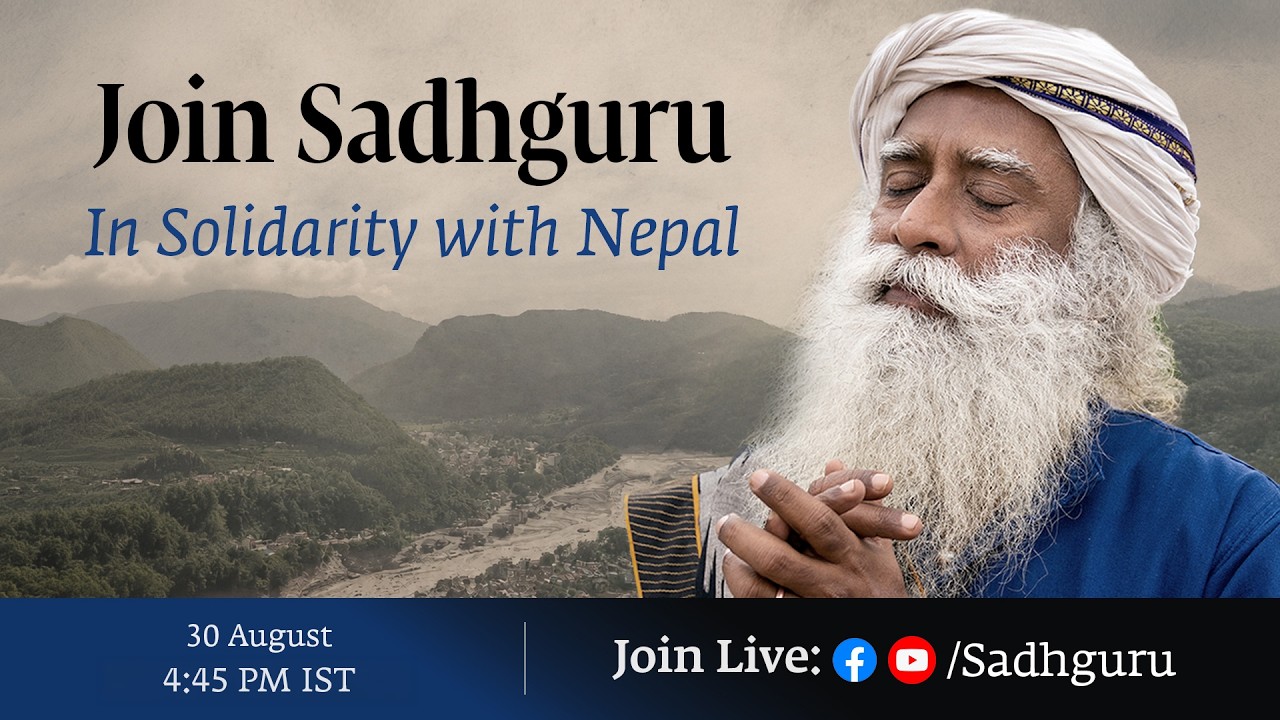
This teaching explores how anyone can become the architect of their own life through practical tools rooted in yoga and conscious design. Rather than treating life as something that happens to you, the talk presents actionable methods for intentionally shaping your existence, examining how your inner state determines your external reality, and offering specific practices to align your consciousness with the life you wish to create.
What Does It Mean to Create Your Life Intentionally?
Most people operate under the assumption that life is something that unfolds around them—a series of circumstances, choices made by others, and random events. Sadhguru's teaching reverses this premise: you are not a passive observer but an active creator of your reality. The distinction is crucial. Creating your life intentionally means recognizing that your inner experience—your consciousness, beliefs, emotional state, and attention—directly shapes what manifests in the external world.
This is not positive thinking or wishful thought. Rather, it is grounded in the understanding that consciousness itself is the fundamental material of existence. If your inner state is chaotic, reactive, and unconscious, your external life will reflect that disorder. If your inner state is clear, intentional, and conscious, your external circumstances will increasingly align with that clarity. The tools discussed in this teaching are designed to shift your inner state so that your life becomes a conscious creation rather than an unconscious accident.
Why Does Your Inner State Determine Your External Reality?
The relationship between inner consciousness and outer circumstance is not mystical—it is mechanistic. Your emotional state, your beliefs, and your attention literally determine how you perceive and interact with the world. Two people in identical circumstances will have completely different lives because their inner experience is different. One person may see a crisis as an opportunity; another sees only loss. One person's nervous system is regulated and creative; another's is contracted and reactive.
Beyond perception, your state of being attracts and creates different outcomes. When you operate from anxiety, you make anxious decisions. When you operate from clarity, you make clear decisions. When you operate from resentment, you attract resentful people and situations. This is not law-of-attraction mysticism—it is cause and effect. Your consciousness is the primary cause; external circumstances are secondary effects.
The teaching emphasizes that most people spend their entire lives trying to change external circumstances—their job, their relationships, their possessions—without ever touching the one thing that actually determines those circumstances: their own consciousness. This is like trying to fix a television by adjusting the external frame while ignoring the internal circuitry.
What Are the Primary Tools for Creating Your Life Consciously?
The teaching presents several foundational tools, rooted in yoga and contemplative practice:
- Awareness and Attention: The first tool is developing the ability to observe your own mind without being swept away by it. Most people are completely identified with their thoughts and emotions—they believe they are their anxiety, their anger, their desire. The practice is to create space between your consciousness and your mental/emotional activity, so you can observe and choose rather than react automatically. This is fundamental to all conscious creation.
- Energy Management: Your energy—your life force, your vitality—is the fuel for everything you do and create. Most people waste tremendous energy through unconscious habits, emotional reactivity, and misaligned effort. The tools include practices like Isha Kriya (a meditation practice) designed to stabilize and amplify your energy, making more of it available for conscious creation. When your energy is high and stable, you naturally make better choices and attract better circumstances.
- Clear Intention: Once you have awareness and energy, the next step is clarity of intention. This is not vague wishfulness but a precise, emotionally-engaged commitment to a specific direction. Your intention acts like a tuning fork—it aligns your consciousness with a particular frequency or outcome. Without clear intention, your energy scatters in all directions.
- Alignment Between Thought, Word, and Action: A major source of suffering and ineffectiveness is misalignment—thinking one thing, saying another, and doing a third. This fragmentation wastes energy and prevents manifestation. The practice is to bring your thinking, speaking, and acting into harmony. When these three are aligned, your power multiplies exponentially.
- Yoga and Somatic Practices: The teaching roots these tools in yoga, not as exercise but as a science of union—the integration of body, mind, and consciousness. Practices like asana, pranayama (breath work), and meditation directly affect your neurochemistry, emotional state, and the coherence of your system. A body that is coordinated and energized is far more capable of creating than a body that is tense, sluggish, or dissociated.
How Does Yoga Function as a Tool for Conscious Creation?
Yoga is often misunderstood in the West as physical exercise. In the teaching, yoga is presented as a comprehensive system for aligning and optimizing consciousness. The Sanskrit word "yoga" means union—specifically, the union of the individual consciousness with the larger cosmic consciousness, or of fragmented parts of yourself into wholeness.
When you practice yoga properly, several things happen simultaneously. Your nervous system becomes coherent rather than scattered. Your body's energy flows more freely instead of being blocked by tension and trauma. Your mind becomes quieter and more focused. Your emotional reactivity decreases. And most importantly, you begin to experience yourself as a unified whole rather than a fragmented collection of competing impulses.
A person operating from this unified state has access to far greater power to create than a person who is internally divided. You are no longer sabotaging yourself with unconscious beliefs or emotional patterns. Your whole being is pointed in one direction. This coherence is the prerequisite for intentional creation.
What Role Does Inspiration Play in the Creative Process?
The teaching touches on the question of inspiration—where it comes from and how to cultivate it. Inspiration is not random; it emerges from alignment with something larger than yourself. When you are operating entirely from personal ego and personal goals, your inspiration is limited to what the small self can imagine.
However, when you open yourself to inspiration from sources beyond your individual mind—whether through spiritual practice, nature, art, or service—you gain access to creativity and vision that exceeds your personal capacity. The teaching suggests that the greatest creations come not from willpower alone but from a state of receptivity where inspiration flows through you.
This requires both discipline (the effort to create the right inner conditions) and surrender (the willingness to be a channel for something larger). It is neither pure force of will nor pure passivity, but an integration of both.
How Long Does It Actually Take to See Results?
The teaching addresses a common frustration: the sense that spiritual practice and conscious creation take too long. Many people want immediate results and become discouraged when transformation unfolds gradually. The perspective offered here is two-fold.
First, certain results can be immediate. Within days or weeks of consistent practice, people often notice increased energy, better sleep, more emotional stability, and clearer thinking. These are not imagined—they are real neurological and biochemical changes.
Second, deeper transformation takes time because you are essentially rewiring your nervous system and breaking deeply ingrained patterns. A person who has been anxious for twenty years cannot reasonably expect to be completely at peace in two weeks. But the good news is that with consistent practice, the timeline is actually quite short relative to the magnitude of change. Many people report significant life transformation within 3-6 months of dedicated practice.
The key is consistency, not intensity. A person who meditates for ten minutes every single day will progress far further than someone who meditates for three hours once a month. Small, consistent actions compound over time into major life transformation.
Where to Go From Here
The practical next steps are straightforward: begin a daily practice. This might include meditation (specifically Isha Kriya, which is freely available), some form of yoga or somatic practice to coordinate your body and energy, and conscious reflection on your intentions and whether your daily actions align with them.
Pay attention to your inner state throughout the day. Notice moments when you are reactive versus conscious, scattered versus focused, aligned versus fragmented. This awareness alone begins to shift things. Start making small decisions from this new awareness—not because you "should" but because you begin to see that conscious choice actually works better.
Recognize that creating your life is not about achieving some perfect future state but about progressively bringing more consciousness and intention to the present moment. Each moment you choose awareness over reactivity, alignment over fragmentation, you are creating your life. Over time, these moments compound into a fundamentally different existence.