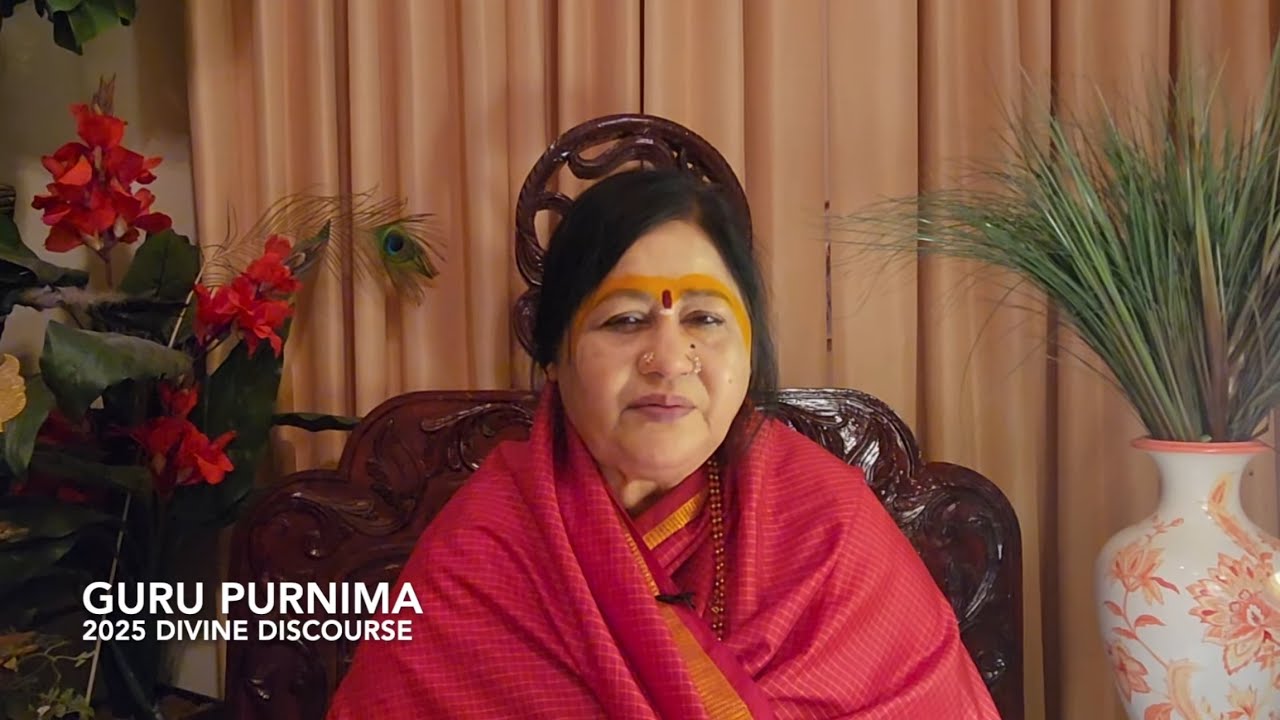
Sri Karunamayi's discourse on the Lalita Sahasranama explores the thousand sacred names of the Divine Mother and their profound spiritual significance. The teaching emphasizes that mere remembrance of these divine names through sincere devotion (bhakti) can awaken spiritual power, purify consciousness, and liberate practitioners from cycles of birth and death. The names themselves carry divine vibrations that connect the devotee directly to the Mother's grace, and their contemplation produces tangible effects on both inner consciousness and worldly circumstances.
What is the Lalita Sahasranama and why is it significant?
The Lalita Sahasranama is a sacred hymn containing one thousand names of Sri Lalita (the Divine Mother, also called Ambika or Durga in Hindu tradition). According to Sri Karunamayi's teaching, these are not merely poetic epithets but direct expressions of divine reality. Each name carries specific frequencies and spiritual potencies that align the practitioner's consciousness with aspects of the Mother's infinite nature.
Sri Karunamayi emphasizes that the Sahasranama represents the complete manifestation of the Mother's divine qualities. When chanted with devotion and understanding, these names become channels through which divine grace flows into the devotee's life. The text is structured to reveal layers of meaning—from the grosser aspects of divine power (shakti) to the most subtle, formless dimensions of the Absolute.
How does name-remembrance (namasmarana) work spiritually?
A central teaching in Sri Karunamayi's discourse is the practice of namasmarana—remembrance of divine names through repetition and meditation. The teaching asserts that mere recollection of the Lalita Sahasranama names produces immediate spiritual effects. This is not understood as magical or superstitious but as a natural law of consciousness: when the mind becomes saturated with divine vibrations, the subtle body and intellect align with higher frequencies of existence.
Sri Karunamayi describes how repeated chanting of these sacred names creates channels of energy (nadis) within the spiritual body and activates dormant spiritual capacities. The practice works at multiple levels:
- Purification: The divine names cleanse mental impressions (samskaras) and negative karmic patterns accumulated over many lifetimes.
- Activation of inner power: Each name awakens corresponding spiritual faculties and kundalini energy along the subtle spine.
- Direct communion: Through namasmarana, the devotee enters into direct relationship with the Mother, bypassing the need for external rituals alone.
- Transformation of karma: The vibrations of sacred names can neutralize obstacles and resolve both psychological and karmic difficulties.
Sri Karunamayi teaches that this practice is accessible to all beings—there are no prerequisites of caste, education, or ritual knowledge. The sincere devotional recitation of even a single name with full heart opens the door to grace.
What are the specific benefits of chanting Lalita Sahasranama?
The discourse highlights that practitioners experience both immediate and long-term benefits from regular engagement with the Sahasranama. These include:
- Mental clarity and peace: The mind becomes stable and free from worldly anxieties as it absorbs the divine vibrations.
- Physical health: Sri Karunamayi notes that sustained practice brings harmony to the five elements within the body, promoting vitality and healing.
- Removal of planetary afflictions: The teaching indicates that the Mother's names have power to neutralize negative astrological influences (graha dosha) and karmic debts.
- Resolution of worldly problems: Devotion to the Mother through these names addresses challenges in relationships, finances, health, and circumstances.
- Spiritual awakening: Deeper practice leads to direct experience of the Divine Mother and recognition of one's true nature as consciousness itself.
- Liberation (moksha): Ultimate fruit of sincere practice is freedom from the cycle of birth, death, and rebirth.
Sri Karunamayi emphasizes that results manifest according to the devotee's sincerity and faith. The Mother responds to genuine love and surrender, not to mechanical or ego-driven practice.
What is the role of Sri Chakra in Lalita Sahasranama practice?
The discourse frequently references Sri Chakra—the sacred geometric diagram representing the manifest and unmanifest dimensions of the Mother's power. Sri Chakra consists of nine interlocking triangles and serves as a visual representation of the same divine forces expressed through the thousand names of the Sahasranama.
Sri Karunamayi teaches that Sri Chakra is the cosmic blueprint of creation itself. When the practitioner meditates on Sri Chakra while chanting the Sahasranama, the practice becomes multidimensional: the names activate corresponding points within the internal chakra system while simultaneously aligning consciousness with the cosmic order.
The chakra practice can include:
- Visual meditation on the geometric patterns of Sri Chakra
- Chanting specific names while focusing on particular triangles or zones
- Worshipping the Mother in the form of Sri Chakra with offerings and devotional ritual
- Understanding each triangle as a gateway to different dimensions of divine power
What is the Pancadashakshari Mantra and its connection to Lalita?
Sri Karunamayi references the Pancadashakshari (fifteen-syllable mantra) as a supreme condensation of the Lalita Sahasranama's power. This mantra is presented as the core vibrational essence from which all thousand names flow. Chanting the Pancadashakshari is described as a shortcut method for those unable to engage the full thousand-name practice.
The teaching indicates that even this shorter mantra, when chanted with devotion and understanding, contains the complete potency of the Mother. It is particularly suited to those in the midst of worldly life who lack time for extended practices. The Pancadashakshari directly invokes the Mother's grace and draws down her blessing.
How should one approach the Sahasranama practice?
Sri Karunamayi provides guidance on how to engage the Sahasranama practice most effectively. The approach emphasizes:
- Purity of heart: The practitioner should cultivate sincerity, humility, and genuine love for the Mother rather than seeking results through ego or manipulation.
- Consistency: Regular daily practice, even for a few minutes, accumulates far more power than sporadic intense effort.
- Understanding: If possible, learn the meanings of the names. This deepens the connection and allows the intellect to become absorbed in divine qualities.
- Surrender: Place oneself entirely in the Mother's hands; allow her grace to work according to her wisdom rather than imposing personal will.
- Integration with life: The practice should transform daily behavior and relationships, not remain isolated from worldly life.
- Faith: Believe that the Mother hears and responds to sincere invocation, regardless of external circumstances or visible signs.
Sri Karunamayi teaches that the Mother is the Mother of all beings and responds to all sincere calls. There is no requirement for special preparation, initiations, or belonging to any particular tradition. The grace of the Divine Mother is available to anyone who calls upon her with an open heart.
What is the Mother's nature according to this teaching?
Throughout the discourse, Sri Karunamayi describes Sri Lalita as the Mother of the Universe (Jagat Jananee)—the primordial feminine principle from which all existence arises. The Mother is not distant or abstract but intimately present within all beings as the animating power of consciousness and life itself.
The Mother is described as possessing infinite attributes: she is simultaneously the fierce warrior who destroys ego and ignorance, the nourishing presence who sustains all life, the wisdom that guides evolution, and the love that yearns for the reunion of the individual soul with the Supreme. The thousand names capture these multifaceted dimensions in poetic and devotional language.
The core insight is that the Mother is not separate from the devotee. In the deepest understanding, the devotee recognizes themselves as an expression of the Mother's own consciousness experiencing itself through individual form. This recognition constitutes the ultimate fruit of the practice.
Where to go from here
If drawn to this teaching, the most direct next step is to begin a simple daily practice of chanting or reciting the Lalita Sahasranama, even if only for five to fifteen minutes. Many recorded versions exist in Sanskrit and local languages. The practice works best when sustained over time—daily recitation for at least forty days begins to show noticeable effects.
Alternatively, one can begin with the shorter Pancadashakshari mantra if time is limited. The key is consistency and sincerity rather than elaborate ritual or duration. As Sri Karunamayi teaches, the Mother responds to the quality of the heart's intention.
For deeper understanding, study the meanings of the names either through traditional commentaries or contemporary explanations. This intellectual engagement with the teaching allows the mind to prepare the ground for direct experience. Above all, approach the practice with gratitude and devotion, recognizing each moment of remembrance as an opportunity to commune with the Divine Mother who dwells at the heart of all existence.