What is Sound Baths?
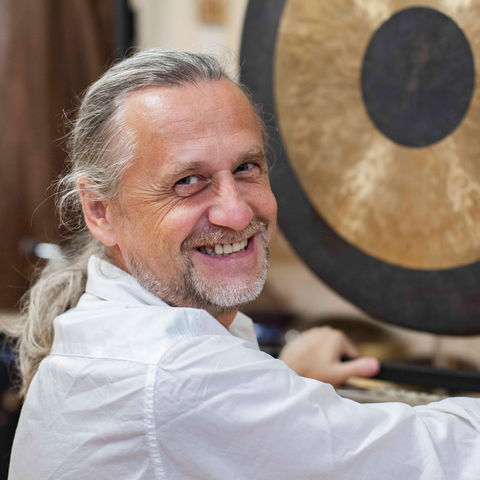
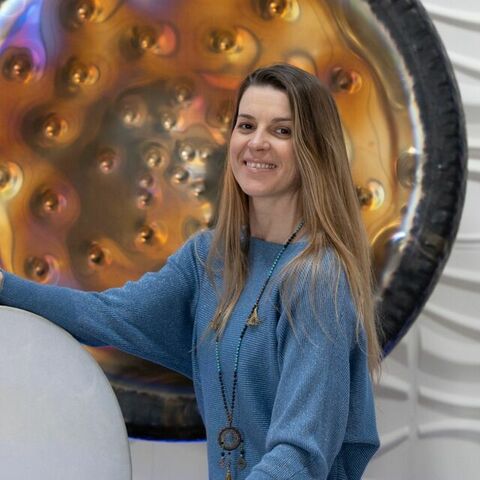
A sound bath is a meditative practice in which participants lie down or sit comfortably while being immersed in sustained, resonant tones produced by acoustic instruments. Unlike listening to recorded music, a sound bath places participants in the physical presence of reverberating frequencies that can be felt throughout the body. Common instruments include Himalayan singing bowls, gongs, crystal bowls, tuning forks, chimes, and the didgeridoo. The practitioner—often called a sound healer—plays these instruments in a continuous, improvisational flow, creating an enveloping sonic environment that facilitates relaxation, contemplation, and altered states of consciousness.
The term “sound bath” is modern, though the underlying premise—that sustained acoustic vibration can influence human physiology and consciousness—appears across ancient traditions. The contemporary sound bath emerged in the West during the late 20th century, drawing on instruments and concepts from Tibetan Buddhism, Indian Ayurveda, Chinese cosmology, and indigenous practices worldwide.
Origins & Lineage
Sound as a healing modality has ancient roots. In ancient Egypt, priest-physicians known as the Sons of Ptah used chants and incantations for healing. Ancient Greek physicians, including followers of Pythagoras, employed music to treat mental disturbances, digestive disorders, and insomnia. In India, Ayurvedic medicine incorporated Nada Chikitsa (“sound healing”), recognizing sound as foundational to creation through the primordial syllable Om. Gongs have been used in China for approximately 3,500 years as ritual instruments and symbols of Qi.
The modern Western sound bath, however, is primarily a late-20th-century development. The counterculture movements of the 1960s and 1970s created fertile ground for experimentation with consciousness-altering practices. Musicians and early sound healers began combining instruments from various traditions—Himalayan singing bowls, Asian gongs, Native American drums—into immersive group sessions. Don Conreaux, a sound healer and musician, is credited with hosting one of the first documented “sound baths” in San Francisco in 1975, using gongs and other instruments to create transformative group experiences.
The instruments most associated with contemporary sound baths—metal singing bowls from Nepal and Tibet—have complex histories. While often marketed as ancient Tibetan meditation tools, these bowls originated in Nepal as rice bowls (dabaka or bata), crafted from seven metals and valued for their mineral content when used for eating. Their use as sound healing instruments emerged more recently, though traditional gong-like instruments did exist in Tibetan monasteries. Crystal singing bowls, now ubiquitous in sound bath practice, were developed even more recently using modern quartz crystal technology.
How It’s Practiced
A typical sound bath session lasts 30 to 90 minutes. Participants lie on yoga mats, often with blankets and eye masks, in a dimly lit space. Some facilitators begin with brief guided meditation or intention-setting. The sound healer then begins playing instruments—striking bowls with mallets, rubbing their rims to produce sustained tones, creating waves of sound with gongs, or using voice and chimes.
The experience is passive for participants; no prior meditation experience is required. The sounds create a layered acoustic environment with complex overtones and harmonics. Singing bowls produce steady, grounding tones, while gongs generate less predictable, more dramatic waves of sound. The sustained vibrations are both heard and felt, creating what’s described as a full-body listening experience. Many participants report entering deeply relaxed or meditative states, experiencing vivid mental imagery, or falling asleep.
The practice differs from concert listening in its therapeutic framing and the physical proximity of vibrating instruments. Some practitioners place bowls directly on or near the body. The scientific principle of entrainment—whereby external rhythmic pulses can influence bodily rhythms like heart rate and breathing—is often cited as a mechanism, though research remains limited.
Sound Baths Today
Sound baths have gained widespread popularity in wellness culture since the 2010s. They’re offered at yoga studios, meditation centers, retreat centers, spas, and wellness festivals worldwide. Urban centers like London, Los Angeles, and New York host regular public sound bath events. Some hospitals and integrative medicine practices now incorporate sound baths for stress reduction.
Online platforms offer recorded sound bath sessions, though practitioners emphasize the importance of live, in-person vibration. Sound baths are frequently combined with other practices: yoga classes, cacao ceremonies, new moon rituals, or breathwork sessions. The practice has become professionalized, with various training programs and certifications available for aspiring sound healers.
Sound bath instruments, particularly singing bowls, have become significant commercial products, with authentic handcrafted bowls from Nepal commanding premium prices. Crystal bowls, which can be tuned to specific frequencies, are marketed with claims about chakra alignment and planetary healing vibrations.
Common Misconceptions
Sound baths are not a cure for serious physical or mental health conditions. While many people report feeling relaxed, centered, or emotionally moved, scientific evidence for specific therapeutic effects remains preliminary. Claims that sound baths can “heal disease,” “balance chakras,” or “restore vibrational frequencies” are speculative rather than scientifically established.
The historical narrative around sound bath instruments is often romanticized. “Tibetan singing bowls” were not necessarily meditation tools used by ancient monks; their use as sound healing instruments is relatively recent. The practice represents a modern synthesis drawing on multiple traditions rather than an unbroken ancient lineage.
Sound baths are not music therapy, a distinct clinical discipline with different training, methodology, and evidence base. They’re also not a religious practice, though they may incorporate elements from Buddhist, Hindu, or other spiritual traditions.
Finally, a sound bath requires no active participation, special belief system, or meditation skill. It’s a passive sensory experience, not a technique requiring mastery.
How to Begin
The most accessible entry point is attending a public sound bath at a local yoga studio, meditation center, or wellness space. Most cities with active wellness communities offer regular sessions, typically priced between $20-50. Arrive early to claim floor space, bring a yoga mat (many venues provide these), and dress comfortably for lying still.
For those curious about the instruments themselves, purchasing a small Himalayan singing bowl from an ethical supplier allows for home experimentation. Legitimate bowls from Nepal or India typically cost $30-150 depending on size and craftsmanship. Online platforms like Insight Timer offer thousands of recorded sound bath tracks for home listening, though these lack the physical vibration of live sessions.
Those interested in deeper study might explore the work of contemporary sound healers like Jamie Bechtold or investigate the broader field of music therapy for a more clinically grounded approach. Books on the subject tend toward the devotional rather than academic, so approach claims critically. The practice is experiential—the primary question is whether the experience itself provides value for your meditation or relaxation practice.